Four People, 378 Days, and No Way to Leave Mars
Inside a 3D-printed habitat in Texas, four volunteers are discovering what it takes to live together on another planet. Their mission isn’t about traveling to Mars. It’s about learning whether humans can make a home there.
PEOPLE & CULTURE | GALACTIC BAZAAR
Imagine waking up every morning knowing that you cannot step outside, visit a friend, or have a real-time conversation with your family.
Your entire world consists of a handful of rooms, three other people, and a simulated Martian landscape.
For four volunteers at NASA’s Johnson Space Center in Houston, this isn’t a hypothetical scenario. It’s their everyday reality.
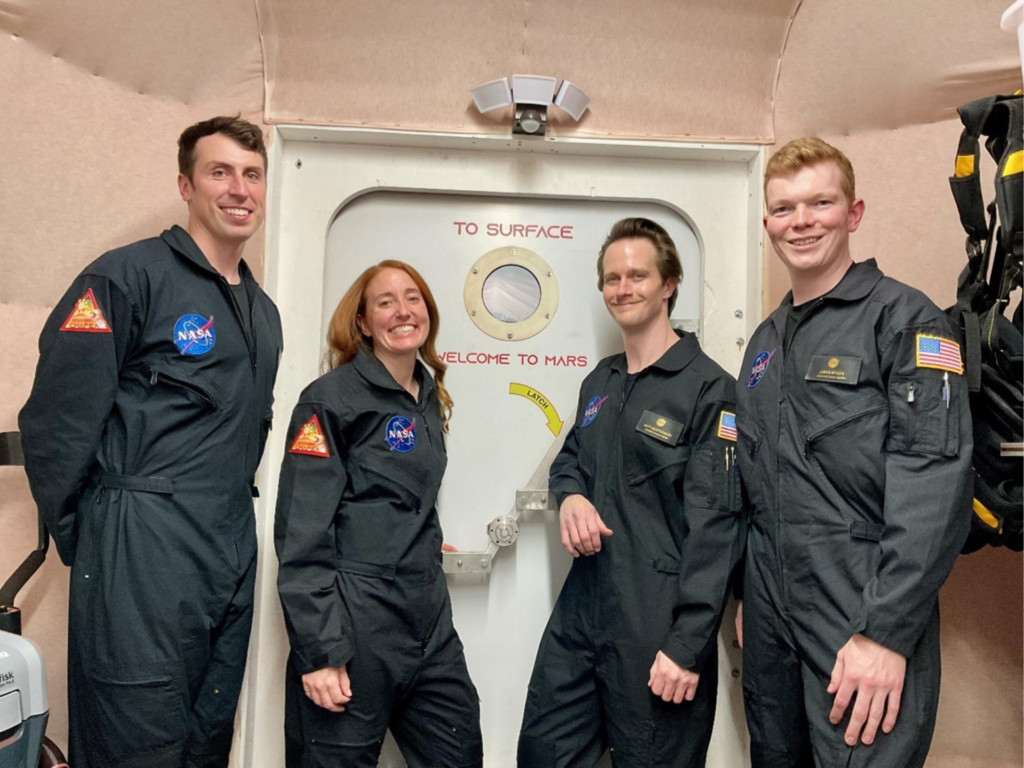
On October 19, 2025, Ross Elder, Ellen Ellis, Matthew Montgomery, and James Spicer entered a 1,700-square-foot habitat known as Mars Dune Alpha.
Their assignment: spend 378 days living as though they were on Mars.
As of October 23, 2026, they’re approaching the conclusion of their extraordinary experiment, with their scheduled return to ordinary life just eight days away.
But what NASA is studying goes well beyond the technical challenges of spaceflight.
It’s investigating something much more familiar—and perhaps more complicated.
How do human beings live together when leaving isn’t an option?
01 / A Home That Looks Like Mars
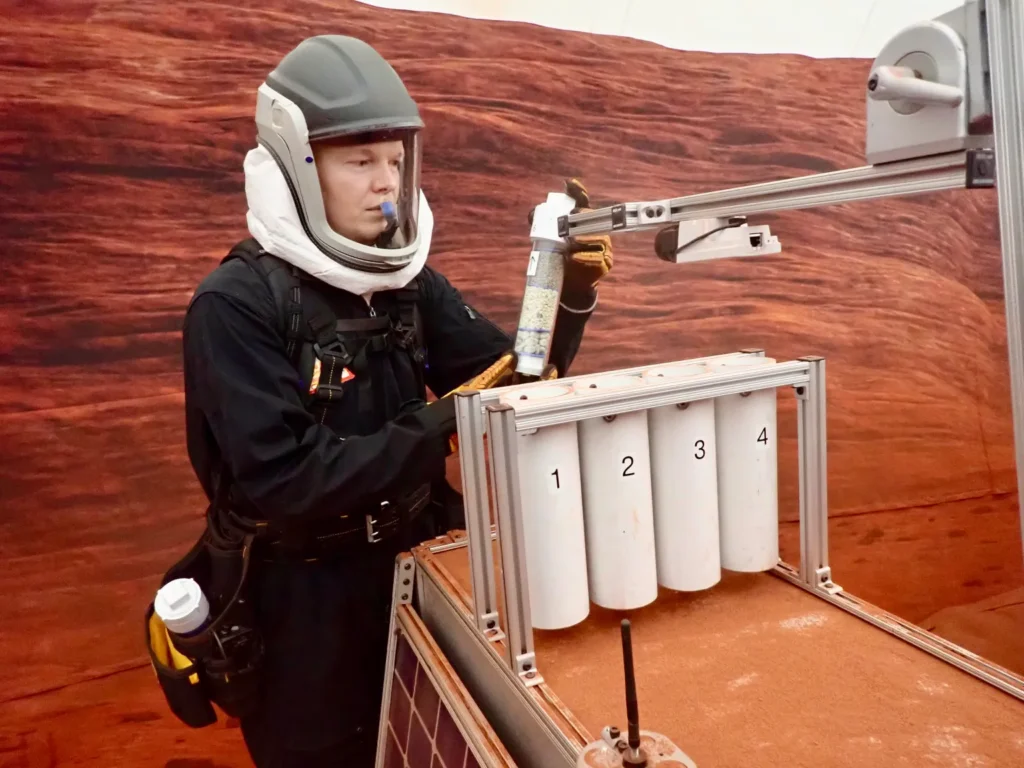
Mars Dune Alpha is not located on a distant planet. It stands inside a NASA facility in Houston, where researchers can carefully monitor a simulated extraterrestrial mission.
Its walls were built using 3D-printing technology, creating a habitat designed around the needs of a small crew.
Inside are individual living quarters, shared working spaces, exercise equipment, and areas for growing food.
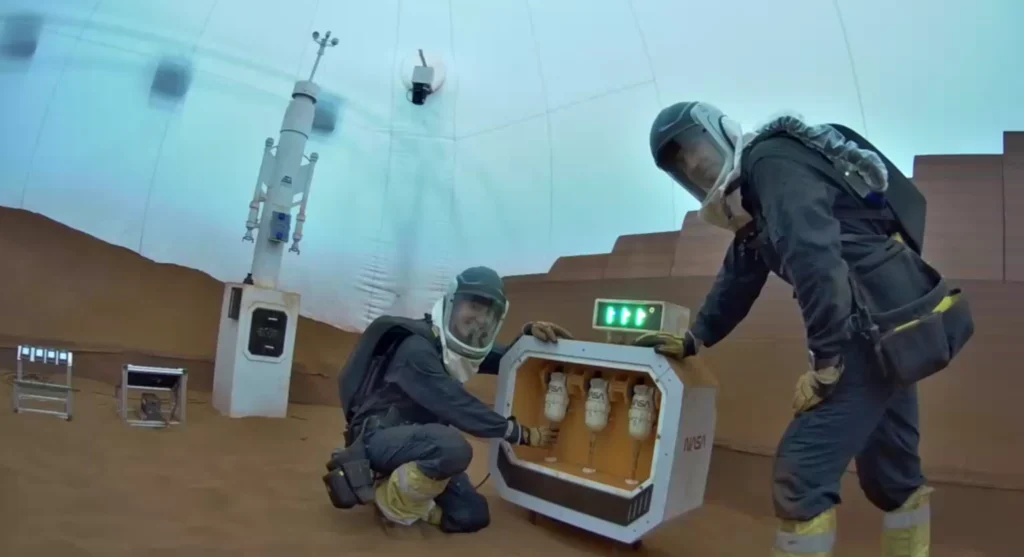
Outside the main living space is a simulated Martian landscape where participants conduct carefully planned activities resembling spacewalks.
The current crew includes a mission commander, medical officer, science officer, and flight engineer.
Each has responsibilities, but all four must share the same limited environment.
They exercise, maintain equipment, grow crops, and perform scientific tasks while NASA introduces challenges such as restricted supplies, equipment problems, and delayed communications.
Messages between Mars and Earth can take many minutes to travel. NASA reproduces that problem by delaying communications between the habitat and mission support.
Even a simple conversation becomes complicated when an immediate response is impossible.
02 / The Problem With Other People
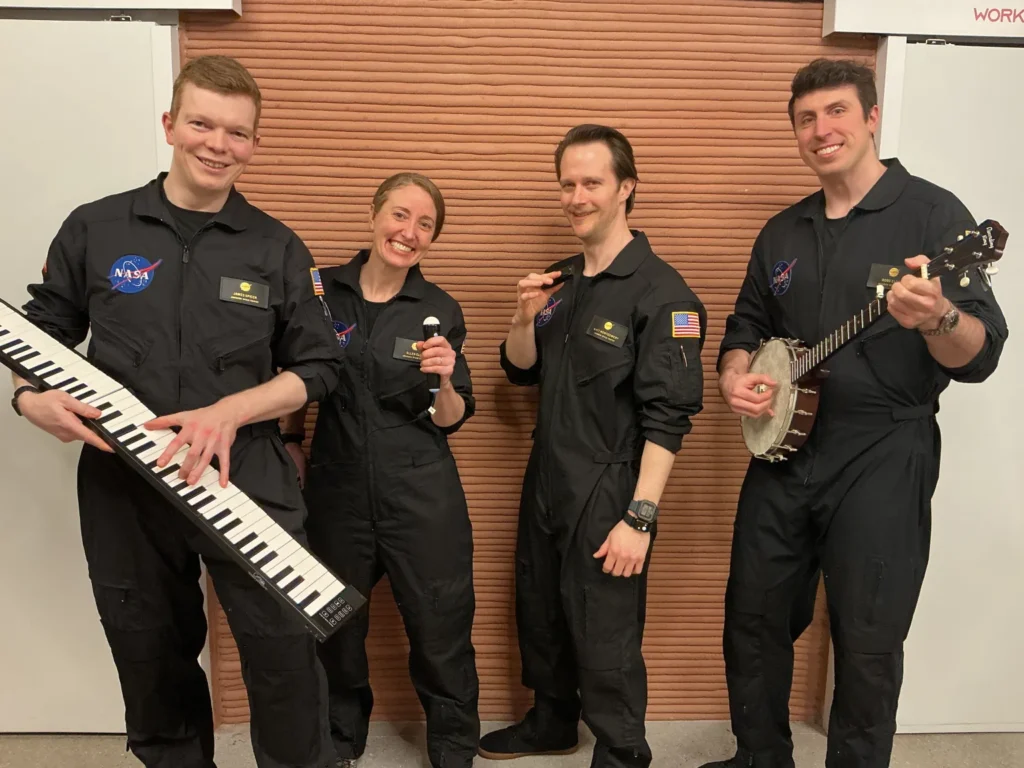
A successful Mars mission will require more than astronauts who can operate sophisticated equipment.
They must also be able to live and work together under extraordinary circumstances.
There are no spontaneous visits from friends, no weekend trips, and no easy escape from the people sharing the habitat.
NASA’s CHAPEA program—Crew Health and Performance Exploration Analog—examines how isolation, confinement, limited resources, and demanding workloads affect human health and performance.
Researchers collect information that could help future mission planners develop better living environments, work schedules, and support systems.
For the volunteers, even ordinary decisions take place within an unusual set of constraints.
How should limited resources be managed? What happens when equipment fails? How much independence should a crew have when Earth cannot immediately respond?
The answers matter because astronauts traveling to Mars will need to solve problems without constant guidance from home.
The CHAPEA experiments are designed to help NASA understand those demands before anyone makes the journey.
03 / Birthdays, Christmas, and Growing Tomatoes
Perhaps the most revealing details about life on simulated Mars come from the people who have already completed the experiment.
NASA’s first CHAPEA crew—Kelly Haston, Ross Brockwell, Nathan Jones, and Anca Selariu—entered Mars Dune Alpha in June 2023 and emerged in July 2024.
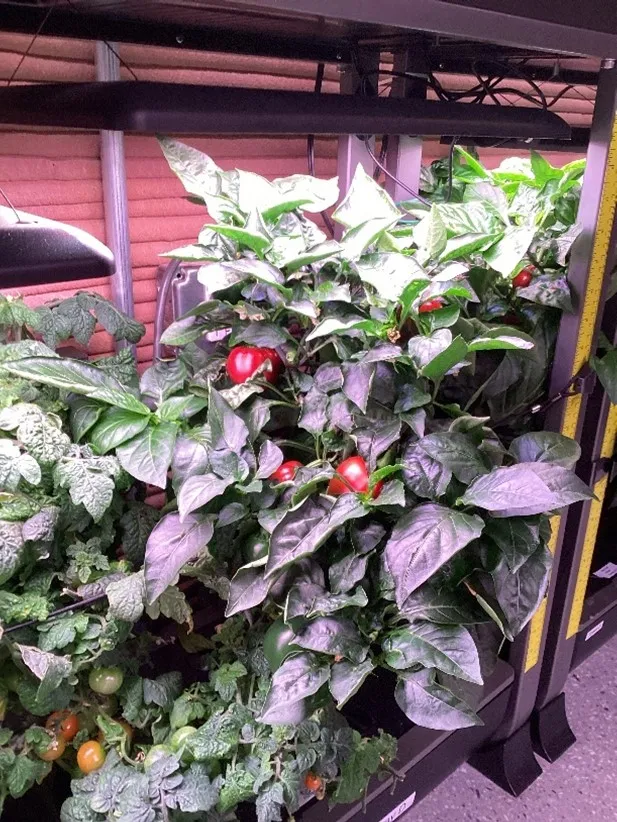
During their 378 days together, the volunteers conducted simulated Marswalks, performed maintenance, and grew vegetables to supplement their packaged food.
They harvested tomatoes, peppers, and leafy greens.
But they also celebrated holidays and birthdays, gave one another haircuts, and found ways to enjoy their time together.
NASA photographs show the first crew celebrating Christmas inside the habitat, a familiar tradition taking place in an unfamiliar setting.
These moments offer a glimpse into a question rarely explored in dramatic depictions of space travel.
What parts of everyday human culture would we carry to another planet?
A holiday meal, a birthday celebration, or the satisfaction of growing a tomato might seem insignificant compared with building rockets or landing spacecraft.
Yet familiar rituals could become important parts of daily life in a place where nearly everything else feels different.
The first crew’s experience provides documented examples of these ordinary activities. The second crew is conducting its own separate mission, and its complete experiences will become clearer after the experiment ends.
04 / Could You Actually Live on Mars?
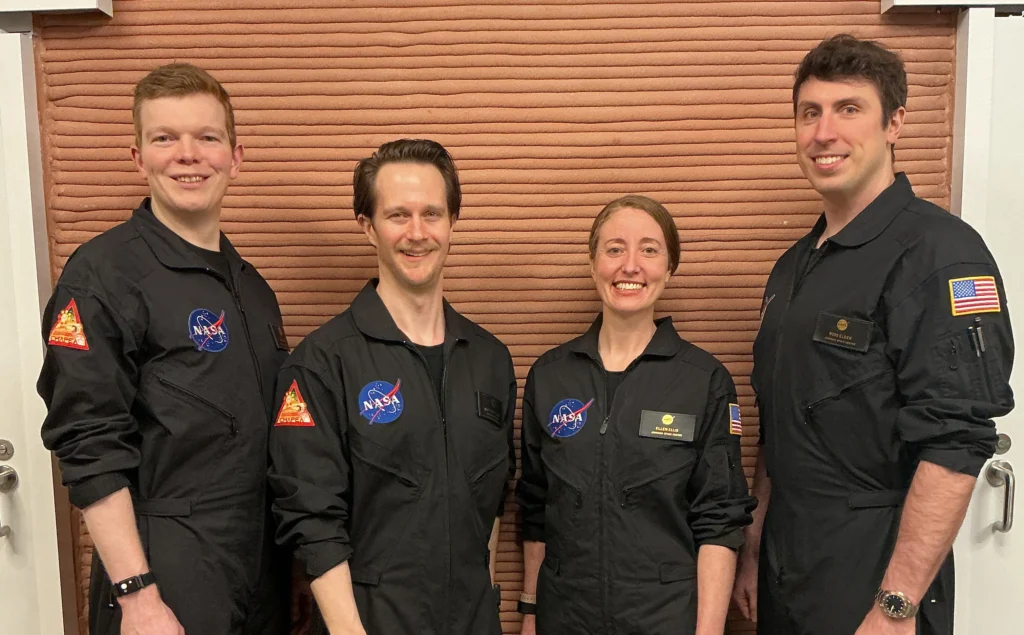
On October 31, 2026, the second CHAPEA crew is scheduled to open the habitat door and return to life outside their simulated Martian home.
Their 378-day experiment will be complete.
NASA scientists will then conduct post-mission evaluations and examine the information collected throughout the year.
The research could help shape future decisions about crew selection, habitat design, food systems, daily schedules, and the support humans need during extended missions far from Earth.
But Mars Dune Alpha cannot recreate every challenge of another planet.
Earth’s gravity remains unchanged. The crew is not exposed to the same radiation environment or physical risks astronauts would face in deep space. And emergency assistance is available nearby.
What the habitat can reproduce are important parts of the social and operational experience: isolation, confined living, resource restrictions, demanding work, and delayed communication.
Those are challenges technology alone cannot eliminate.
Humanity has spent decades designing machines capable of surviving in space.
Now scientists are studying how people might live inside them.
If humans eventually build settlements beyond Earth, life there won’t consist entirely of scientific discoveries and historic first steps.
There will be ordinary mornings, shared meals, disagreements, celebrations, and chores that somebody still has to do.
And perhaps, somewhere beneath the unfamiliar sky of Mars, someone will be tending a small garden of tomatoes.
Sources & Image Credits
- NASA — Simulated Mars Crew Marks One Year Inside Habitat (Mission 2, October 19, 2026)
- NASA — CHAPEA Mission 2
- NASA — Voyagers of Mars: The First CHAPEA Crew’s Yearlong Journey (Mission 1)
- NASA — First Mars Analog Crew Nears End of Mission (Mission 1 photographs)
Photography: NASA and NASA/CHAPEA Crew, as credited individually on the photographs. Mission 1 archival photographs are separate from the Mission 2 crew’s experiences. NASA media usage guidelines.